Effective Training Drills to Improve Your Team’s Passing Accuracy
Improving a team’s passing accuracy requires more than just repetition. It involves developing the ability to make quick decisions, execute precise technique, and maintain spatial awareness under pressure. For coaches seeking structured methods, several training drills focus specifically on enhancing passing quality, first-touch control, and the speed of combination play. These exercises are designed to simulate match-like situations while allowing players to refine the fundamentals in a controlled environment.
This article outlines a set of practical drills that can be integrated into regular training sessions. Each drill emphasizes a specific aspect of circulation: from short-range accuracy to long-switch distribution and quick one-touch play. While no drill can guarantee perfection on match day, incorporating these activities into a weekly routine can contribute to a more cohesive and fluid passing game.
Core Passing Accuracy Ladder
The foundation of effective circulation lies in the ability to deliver the ball accurately over various distances. The core passing accuracy ladder focuses on progressive distance and angle variations, encouraging players to adjust their weight of pass and body positioning. This drill is structured as a sequence of stations, each requiring a different passing technique.
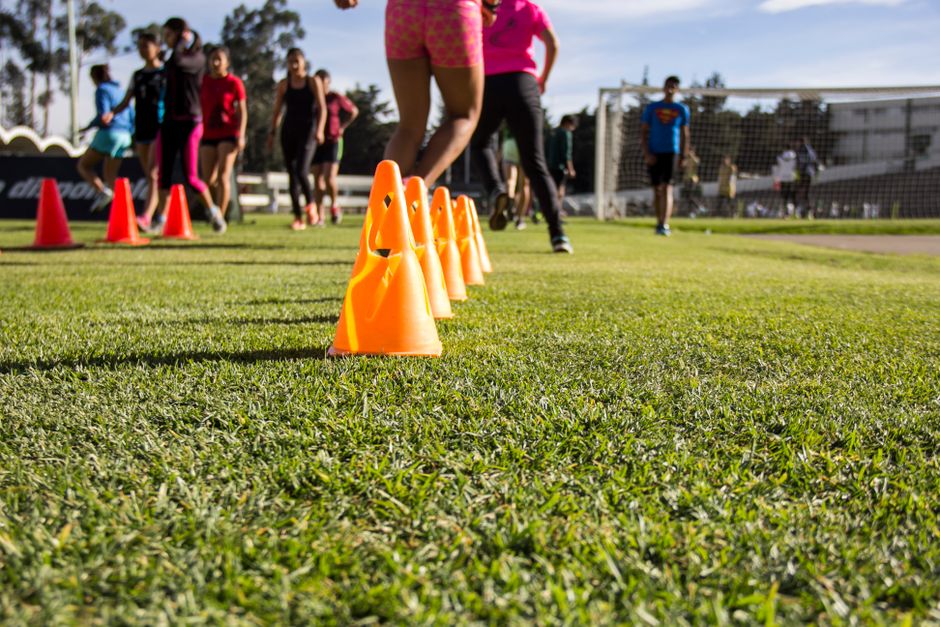
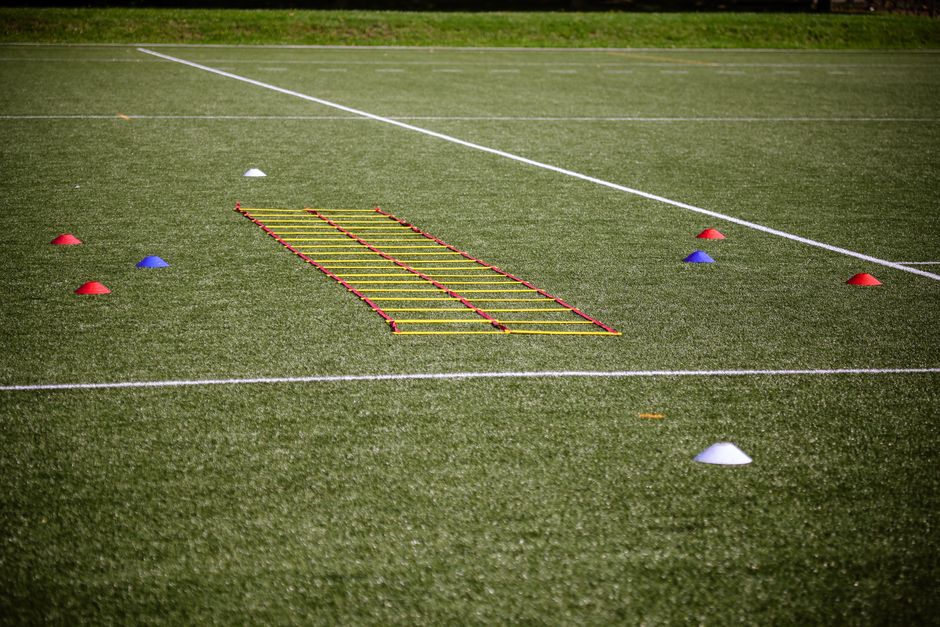
Set up cones or markers in a straight line, with intervals of five, ten, fifteen, and twenty yards. Players form two lines facing each other at each interval. The activity begins with players passing the ball along the ground using the inside of the foot, emphasizing a smooth, controlled strike. As the distance increases, coaches can introduce the use of the laces for longer passes, promoting proper follow-through and accuracy.
To enhance the challenge, incorporate movement after each pass. The passer should immediately move to a new position, simulating the need to reposition after distribution. This not only improves passing accuracy but also develops awareness of space and timing. Coaches can also add a passive defender at the longer distances to apply light pressure, forcing players to adjust their technique under duress.
This drill is most effective when performed at a high tempo, with players focusing on the quality of each touch rather than just the pace. Encourage players to call for the ball and communicate effectively, replicating the verbal cues used in matches. The structured progression ensures that every player, regardless of skill level, can work on both short and long passing accuracy in a single session.
First Touch Control Circles
Control is the link between receiving a pass and making the next one. The first touch directly influences the speed of circulation, as a poor touch can break the rhythm of play. The first touch control circles drill is designed to develop the ability to receive the ball while simultaneously setting up the next pass, all within a confined area.
Create a circle with a radius of approximately ten yards, with six to eight players stationed evenly around the perimeter and one or two players in the center. The players on the outside pass the ball to those inside, who must control the ball with a single touch and return it to a different outside player. The drill encourages receiving with the inside or outside of the foot, depending on the angle of the pass, and promotes scanning before the ball arrives.
To increase difficulty, coaches can instruct the inside players to turn with the ball and pass to a player on the opposite side of the circle. This introduces a directional element, forcing the receiver to orient their body before receiving. Another variation is to have the outside players move after passing, simulating runs and encouraging quick decision-making.
This drill emphasizes the principle that a good first touch is not just about stopping the ball but about directing it into space. By constantly adjusting body shape and using peripheral vision, players learn to receive and release in one fluid motion, which accelerates the pace of circulation. The circular setup also provides a safe environment for repetition, allowing players to develop confidence in their touch under minimal pressure.
Combination Play in Small-Sided Grids
Quick combination play is the essence of fluid ball movement, often seen in give-and-gos and wall passes that unlock defensive lines. The combination play grid drill focuses on executing these patterns in tight spaces, improving the understanding of movement off the ball and the timing of passes.
Divide a 30×30 yard area into four smaller grids, with three to four players per grid. The objective is to maintain possession while completing a specified number of consecutive passes, encouraging rapid passing and intelligent positioning. Coaches can introduce conditional rules, such as limiting touches to two, or requiring passes to be made into the feet of a teammate who is moving between grids.
One effective variation is the rondo plus one, where a team of five or more attempts to keep the ball away from two defenders within a circle. The exercise promotes constant scanning, quick decision-making, and the use of the first touch to shield the ball. Players must communicate and support the receiver by offering angles for the return pass, fostering teamwork.
To simulate match scenarios, coaches can add directional gates or targets within the grid. For example, after completing a series of passes, the team must play a through ball into a small goal or a teammate in an end zone. This encourages risk-taking and verticality while maintaining the principles of short passing. The competitive nature of small-sided games also introduces an element of pressure that cannot be replicated in unopposed drills, making the transition to full-sided matches smoother.
The essence of effective circulation is not how many passes you complete, but how each pass creates a problem for the opponent.
Rondo Variations for Quick Decision-Making
Rondos are a staple in modern training for their ability to cultivate quick thinking and positional awareness. These drills reinforce the habits of receiving under pressure, providing immediate support, and exploiting numerical advantages. The rondo variations presented here add layers of complexity to prevent staleness and to work on specific passing techniques.
The conventional 4v2 rondo involves four players positioned on the corners of a square and two defenders in the middle. The objective is to keep possession for a set number of passes, with the defenders trying to intercept. To focus on passing accuracy, coaches can set a minimum number of passes required before the ball can be switched from one side to another, encouraging long, accurate crossing passes.
Another variation is the 3v3 plus two, where a central midfielder acts as a neutral player, always supporting the team in possession. This introduces the concept of creating triangles and numerical superiority in the middle of the park. The neutral player is restricted to one or two touches, promoting crisp passing and off-the-ball movement to create passing lanes.
Coaches can also implement a scoring system based on the number of passes completed in a sequence, or the successful execution of a switch of play. This adds a motivational element while reinforcing the value of accurate distribution. Rondos are highly scalable and can be adapted to the age and ability of the players, making them a versatile tool in any coach’s repertoire.
The key to successful rondo training is the intensity and the focus on the details of passing: the weight of the pass, the timing of the release, and the ability to receive with an open body. By constantly adjusting the size of the area and the number of defenders, coaches can control the level of difficulty and ensure that players are consistently challenged.
Transition and Positional Rotation
To progress beyond static circulation, drills must incorporate transitions between attack and defense, as well as positional rotations. This mirrors the dynamic nature of a match where players shift roles and occupy different spaces. The positional rotation drill integrates passing with movement off the ball, requiring players to fill vacated zones after making a pass.
Set up a pitch with three zones (defensive, midfield, attacking) and use a formation of four defenders, three midfielders, and three forwards. The drill begins with the defenders circulating the ball among themselves before advancing it to a midfielder. After releasing the pass, the defender must push forward into the midfield zone to support the attack, while a midfielder drops to fill the defensive position.
This constant rotation ensures that passing options are always available and that players develop an understanding of covering for teammates. The drill can be extended by adding a neutral player who always plays for the team in possession, further enhancing the numerical advantage. Coaches can also require a certain number of passes in each zone before progression, promoting patience and circulation under structured positional discipline.
To challenge the team’s ability to transition quickly, the drill can be modified so that upon losing possession, the team must immediately press to win the ball back within five seconds. This fosters a proactive defensive mindset and emphasizes the role of passing in regaining control. The integration of transitions and rotations prepares players for the fluidity of modern soccer, where every player is expected to contribute in multiple phases of play.
Ensuring that players understand their individual spatial roles is critical. By consciously rotating positions, they learn to read the game better and anticipate where their teammates will be. This is particularly beneficial for younger players who may have specialized in one position, as it broadens their tactical understanding and enhances their passing options in various situations.
Maintaining Pass Tempo Under Pressure
One of the greatest challenges in circulation is maintaining the tempo of passing when pressed by opponents. This drill simulates that pressure by introducing tight man-marking and limiting time on the ball, forcing players to make quicker decisions and release earlier. The goal is to condition players to scan the field in advance and to use the first touch to set up the pass immediately.
Set up a 25×25 yard area with six players against two defenders, but reduce the number of touches to two or even one where possible. The defenders are instructed to press extremely aggressively, trying to force mistakes. This environment encourages players to move the ball swiftly, with short, accurate passes that are difficult to intercept.
Coaches can add a condition that a pass must be played to a player who is moving, rather than stationary, to encourage proactive receiving. This promotes checking runs and creating space, which are essential for beating a press. Additionally, players can be encouraged to use the third-man concept, where a player passes to a teammate who immediately lays the ball off to a third player running into space.
The drill should be performed in short bursts of 90 seconds to maintain intensity and cognitive sharpness. After each bout, allow short recovery periods for feedback. It is crucial to emphasize that errors are part of the learning process and that the objective is not to avoid mistakes entirely but to speed up decision-making and execution.
By regularly exposing players to such high-pressure environments, they become comfortable receiving the ball with less time and space, which directly translates to improved passing accuracy under pressure. The ability to remain composed and precise in these moments is a hallmark of successful teams, and consistent repetition is key to embedding this skill.